
Top Reps
How to Tell If Yeezys Are Fake: Legit Check Guide (2026)
Nov
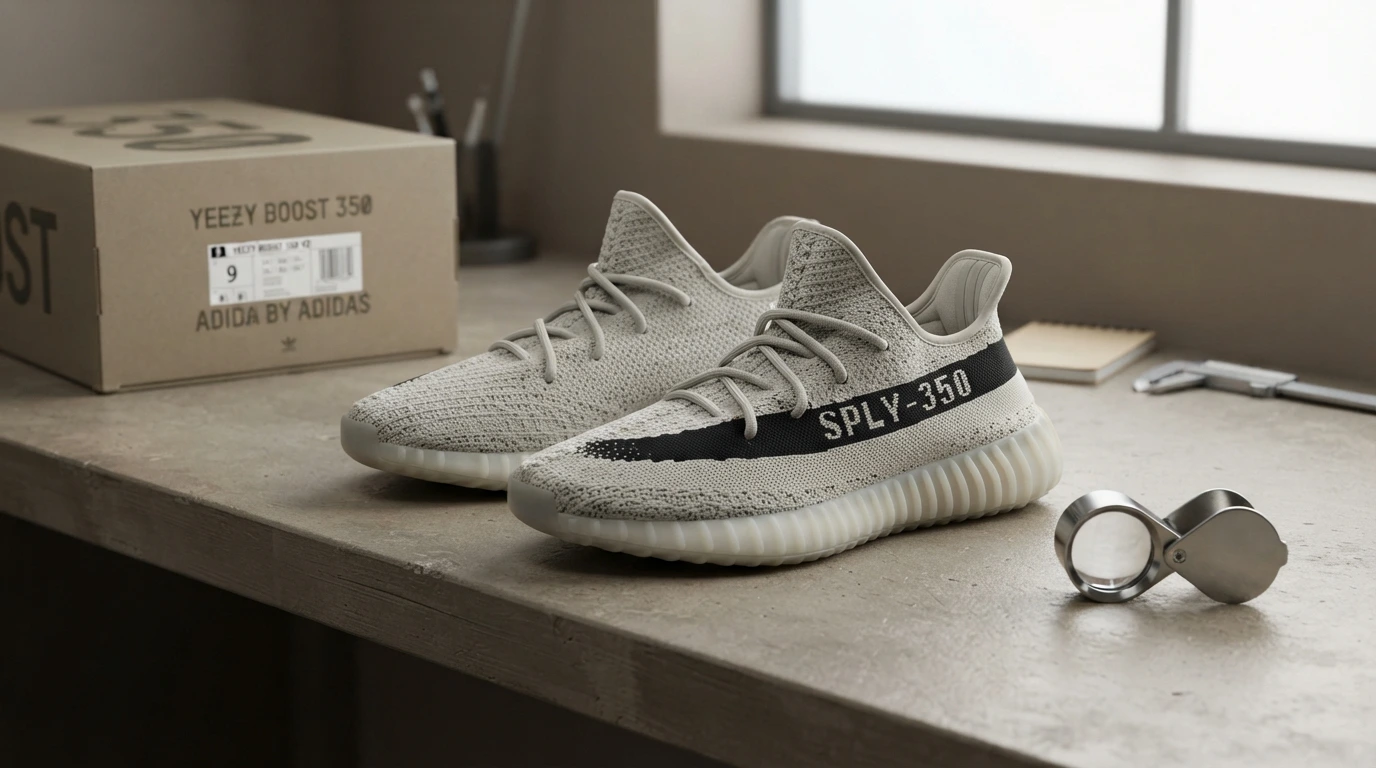
The safest way to tell if Yeezys are fake is not to look for one magic detail. It is to build a chain of evidence: identify the exact model and colorway, match the SKU, compare both shoes against reliable reference images, inspect the size labels and construction, and then evaluate the seller, price, payment method, and return protection. A convincing box, a scannable label, or a familiar Boost pattern is not proof by itself.
That matters in 2026 because counterfeit pairs can reproduce the broad appearance of popular Yeezy models, making a single visual "tell" less reliable than a structured comparison. A pair can have convincing knit, acceptable packaging, and a plausible-looking tag while still failing on proportions, stitching, material behavior, or model-specific details. Conversely, an authentic pair can show factory variation, storage discoloration, creasing, or a label that looks different from an online comparison because it is a different production run.
What "authentic" means in a Yeezy legit check
In this article, "authentic" means a pair that is consistent with the genuine product identified by its model, colorway, size, release, and construction. "Fake," "counterfeit," and "reps shoes" mean a pair represented as a Yeezy product but not produced or authorized as that product.
The distinction is important because a pair can be genuine but still misrepresented. A listing may show a real colorway but ship a different size, a worn pair described as new, a replacement box, or a pair with undisclosed repairs.
Before you inspect the shoe: identify the exact Yeezy
Do not begin with "What should a real Yeezy look like?" Begin with "Which Yeezy is this supposed to be?" The answer should include:
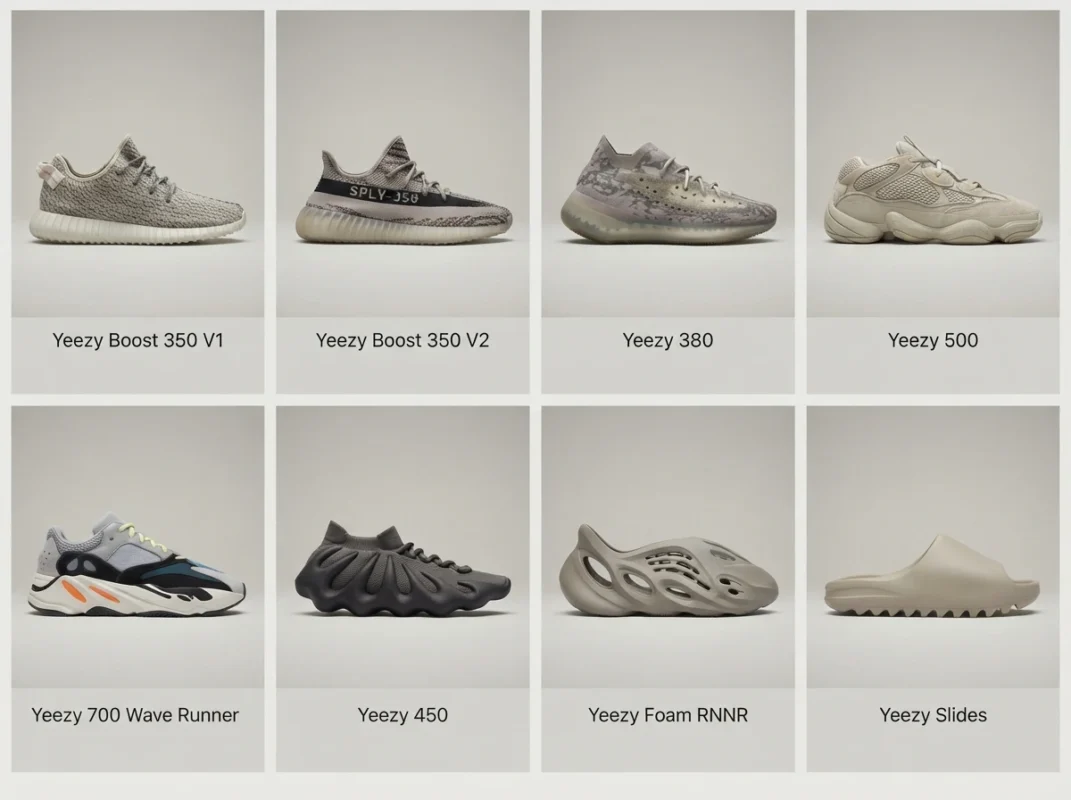
- Silhouette: for example, Yeezy Boost 350 V2, 700, 500, 380, 450, Foam RNNR, or Slide.
- Colorway name: such as Zebra, Bone, Onyx, Wave Runner, or another official release name.
- SKU or product code: the code printed on the shoe label and box label, where applicable.
- Size and region: US, UK, EU, JP/CM, and the size conversion shown on the label.
- Release or re-release context: a later restock can have small packaging or production differences from an earlier release.
- Condition: new, tried on, used, repaired, customized, or replacement parts.
A SKU is not a certificate of authenticity. Counterfeiters can copy a genuine code, and a real box can be paired with a fake shoe. The value of the code is that it narrows the comparison set. It lets you compare the claimed colorway, label layout, box information, outsole design, and release-specific features rather than comparing a random image from another Yeezy.
A practical identification record
Create a short record before you inspect the pair:
| Field | What to record | Why it matters |
| Silhouette | Exact model name | Different Yeezy models use different construction and materials |
| Colorway | Official name plus visual description | Similar-looking releases can have different details |
| SKU | Shoe-label and box-label code | Helps you compare the correct release |
| Size | All size conversions shown | Wrong spacing or inconsistent conversions can expose a bad label |
| Claimed condition | New, used, tried on, repaired | Condition changes what is normal |
| Seller | Username, location, feedback, history | Risk is partly transactional, not just physical |
| Price | Item price plus shipping, tax, fees | A major unexplained discount is a warning signal |
| Returns | Window, exclusions, who pays shipping | Determines what you can do if the pair fails inspection |
The 10-minute Yeezy legit check
If you are inspecting a pair in person or reviewing seller photos, use this order. It moves from high-value identification checks to construction checks and ends with transaction-risk checks.
Step 1: Compare the two shoes as a pair
Start with both shoes together. Look for symmetry in overall height, toe shape, heel shape, lateral panels, collar opening, outsole length, and logo placement. A real pair can have minor asymmetry, but a large difference between the left and right shoe is difficult to explain as ordinary variation.
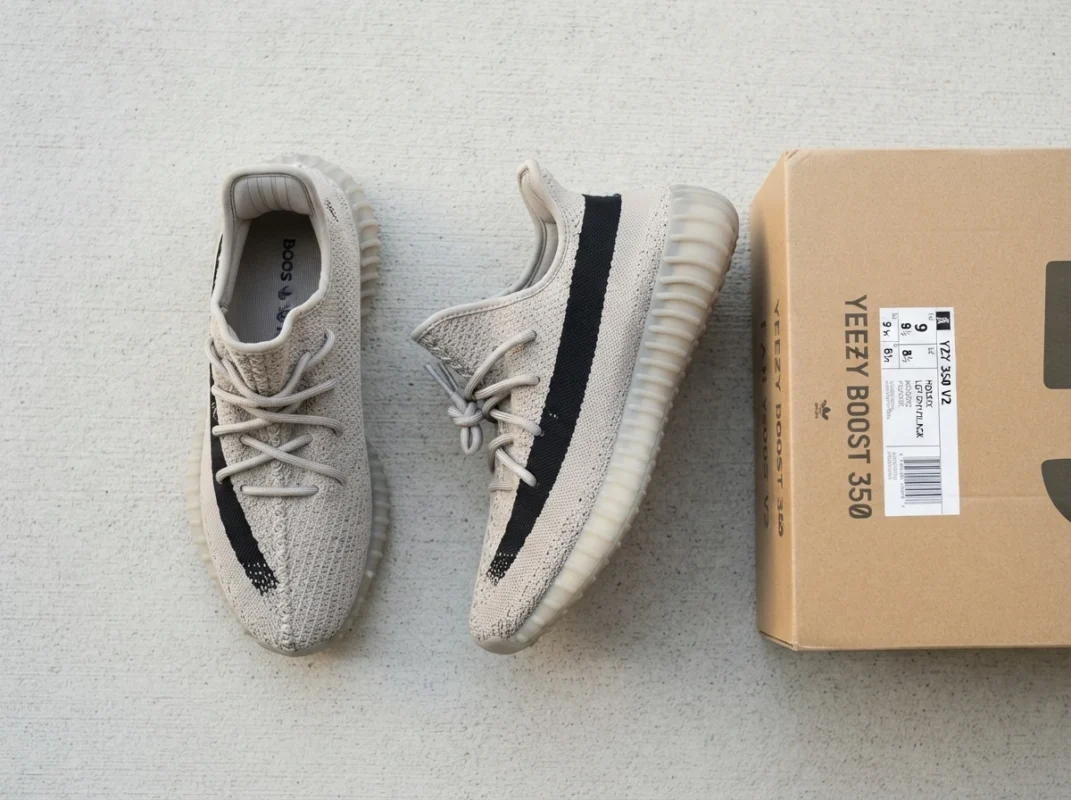
Check whether the size labels identify the same size and SKU. Compare the box label with the labels inside both shoes. A mismatch does not always prove counterfeit status—boxes can be replaced—but it does prove that the history of the pair needs explanation.
Do not rely on a single profile photograph. Ask for the pair to be photographed from the same angle, with both shoes visible. A seller who only provides heavily edited stock photos is not giving you enough evidence to make a confident decision.
Step 2: Read the size labels line by line
The size label is one of the most useful checks because it contains several pieces of information in a compact space. Inspect:
- Print sharpness and alignment.
- Font weight and character shapes.
- Spacing between lines and columns.
- Placement of the size information.
- Country-of-origin and manufacturing text.
- SKU or product code.
- Barcodes and symbols where present.
- Relationship between the label and the stitching or edge of the shoe.
Do not use "the font looks a little bold" as a final verdict. Compare the label with a verified example of the same model, colorway, size range, and release. Counterfeit labels are often copied from photos, so a fake may look close overall while failing in line spacing, alignment, or the position of a small block of text.
The code should agree with the box and with the claimed colorway. If the code belongs to a different colorway, stop treating the pair as a normal variation. You may be looking at a mismatched box, an altered label, or a counterfeit.
Step 3: Evaluate the silhouette and proportions
Shape is difficult to photograph accurately, which is why it should be used with other evidence. Compare the pair with multiple verified images taken from the same angle. Look at the relationship between the toe, midfoot, heel, collar, and outsole rather than asking whether the shoe "looks right."
Common shape questions include:
- Is the toe box too tall, too flat, or too sharply pointed for this model?
- Does the heel rise and curve in the expected way?
- Is the collar opening too wide or too narrow?
- Does the outsole extend naturally beyond the upper?
- Are both shoes shaped consistently?
- Does the upper sit correctly on the midsole, or does it look collapsed or overly bulky?
Used shoes can change shape through wear, heat, and storage. A stretched collar or compressed foam is not automatically a fake. Note the condition first, then judge whether the underlying construction still matches the model.
Step 4: Inspect the upper, knit, panels, or molded material
The right upper check depends on the silhouette. A Primeknit 350 V2 should not be judged by the same standard as a molded Foam RNNR or a paneled 700.
For knit models, inspect the density, direction, transition, and tension of the knit. Look for repeated patterns that are too coarse, too smooth, or placed incorrectly for the colorway. Examine the stripe, lettering, heel tab, collar, and toe transition together. A convincing pattern in the side panel does not compensate for a wrong toe shape or poor stitching.
For leather, suede, mesh, and mixed-material models, check the texture and panel boundaries. Authentic materials can vary with age and storage, so avoid simplistic rules such as "real suede must be very hairy" or "real leather must be perfectly smooth." Instead, compare the material's texture and panel geometry with the same release.
For Foam RNNR and Slides, inspect molding, edges, cavities, texture, footbed, and the relationship between the upper and outsole. Molded products can show seam or surface variation, but deep deformities, inconsistent cavities, excessive flash, and a wrong size-marking layout deserve attention.
Step 5: Check logos, lettering, and orientation
Logos and lettering should be checked for orientation, character spacing, placement, and relationship to surrounding material. On a 350 V2, the SPLY-350 side lettering is a useful model-specific checkpoint. LegitApp's 2026 guide for the "Oreo" re-release identifies side-lettering orientation, tongue stitching, exposed Boost, under-insole details, and size-label layout as five areas to compare.
That does not mean a reversed or imperfect-looking letter is the only test for every 350 V2. It means that lettering should be assessed in context and against the correct release. Take the same-side, same-angle photograph for both the reference and the pair being inspected. Mirrored images can create a false "reversed lettering" result.
Look for:
- Letter direction and order.
- Character height and spacing.
- Placement relative to the stripe or panel.
- Edge sharpness and bleed into the knit.
- Consistency between the two shoes.
- Whether the lettering belongs to that particular colorway.
Step 6: Examine stitching and construction
Stitching can provide stronger evidence than a logo because it reveals how the shoe was assembled. Inspect the tongue, heel, collar, side seams, insole perimeter, and any visible reinforcement.
Ask whether the stitch count and distribution look consistent across the same area. Loose ends, skipped stitches, uneven tension, or a visibly different stitch density on the two shoes may indicate a problem. Yet factory-made footwear is not hand-crafted artwork; small irregularities can occur. The question is whether the irregularity is isolated and plausible or whether several construction areas show the same low-quality pattern.
Step 7: Inspect the midsole, insole, and outsole
Turn the shoes over and inspect the parts that are harder to fake convincingly as a complete system. Check outsole geometry, rubber texture, exposed foam or Boost, mold lines, stamped areas, edge finishing, and wear consistency.
On Boost models, compare the exposed Boost appearance and the shape of the openings or windows with verified examples. In the same Oreo comparison, LegitApp identifies the formation of the exposed Boost pellets, the depth of stamped areas, the openings beneath the removable insole, and the visibility of Boost-related markings as relevant checkpoints.
Do not treat the word "Boost" as a magic test. A counterfeit may imitate the appearance, and an authentic pair may look different after wear, cleaning, compression, or lighting changes. If the outsole, insole area, and upper all disagree with the reference, the combined evidence is much stronger than any single foam detail.
Also inspect the insole's underside and the footbed. Replacement insoles can hide useful evidence, and a used pair may have a different insole from the original. Ask the seller to disclose replacements rather than assuming that a missing original part proves the shoe is fake.
Step 8: Compare the box and accessories
A genuine box is supporting evidence, not a guarantee. Check the box label, model name, size, SKU, barcode, typography, color description, and box construction. Compare the box with the exact release rather than with a different Yeezy model.
Warning signs include:
- Box label and shoe labels do not agree.
- The seller refuses to show the box label in focus.
- The box is from a different size or colorway without explanation.
- The packaging is unusually poor for a supposedly deadstock pair.
- Accessories are presented as "proof" while the shoes themselves are not shown clearly.
Packaging can be swapped, damaged, or lost. A missing box affects value and provenance, but it does not automatically make a pair fake. Conversely, a perfect box can be purchased separately or paired with another shoe.
Step 9: Validate the listing and seller
A legit check that ignores the seller is incomplete. Review the seller's history, location, listing language, photos, response to questions, return policy, and payment request.
A low price is not proof of a fake. A distressed seller, an unpopular size, substantial wear, or a damaged box can explain a discount. But a low price should increase the amount of evidence you demand, not lower it.
Step 10: Stop when the evidence is insufficient
You do not need to prove that a pair is fake before declining to buy. If the SKU cannot be confirmed, the seller will not show labels, the return terms are unclear, or the price creates pressure, the rational decision is to walk away.
For an expensive pair, submit clear images to a reputable authentication service before payment when the service supports pre-purchase checks. After delivery, record the unboxing, retain packaging, and do not remove tags or alter the shoes until you have completed inspection and confirmed the platform's return requirements.
Model-by-model comparison table
The following table is a screening framework, not a substitute for a release-specific reference. It tells you what to prioritize for each family of Yeezy.
| Yeezy family | Main construction to inspect | High-value comparison points | Common mistake |
| Boost 350 V2 | Knit upper, stripe, heel tab, Boost outsole | SPLY-350 orientation, knit pattern, tongue/heel stitching, size label, under-insole details, outsole Boost | Applying a Zebra or Oreo check to every 350 V2 release |
| Boost 350 V1 | Knit upper, side panel, ribbed outsole | Toe and heel proportions, side-panel layout, label, outsole geometry, collar shape | Assuming V1 and V2 share the same lettering or panel rules |
| 380 | Primeknit upper, translucent or patterned outsole | Pattern placement, collar, toe shape, outsole tint and geometry, label | Judging color from photos with different white balance |
| 500 | Suede/leather/mesh panels, sculpted sole | Panel order, material texture, tongue shape, heel and outsole geometry, label | Treating material variation or wear as automatic counterfeiting |
| 700 / Wave Runner | Multi-panel upper, bulky midsole, rubber outsole | Panel geometry, reflective details, heel shape, outsole and box code | Comparing a 700 V1 with V2 or another regional release |
| 450 | Knit upper, molded sole, unusual low profile | Knit density, collar, sole edges, proportions, label and SKU | Relying only on the unusual shape, which can vary by size |
| Foam RNNR | One-piece molded foam | Molding, cavities, texture, footbed, edges, size marking, colorway code | Assuming a light or dark surface difference alone proves a fake |
| Slides | Molded EVA-like construction | Strap/footbed shape, outsole pattern, edges, size marking, colorway | Using generic Slide photos instead of the exact release |
Yeezy 350 V2: a focused real-versus-fake checklist
The 350 V2 receives the most counterfeit attention, so it deserves a separate workflow. Use the following sequence only after confirming the exact colorway and size.
Side stripe and SPLY-350
Check the stripe's width, position, edge, and relationship to the knit. Then examine the SPLY-350 lettering from a correctly oriented photograph. Look for reversed or poorly placed characters, incorrect spacing, fuzzy edges, and a pattern that does not match the colorway.
Do not make the common mistake of photographing one shoe from the opposite direction to the reference. A horizontally flipped image can make authentic lettering look wrong.
Heel tab and collar
Compare the heel tab's location, shape, stitch attachment, and angle. Inspect the collar opening and the transition between collar, heel, and knit. An overly tall heel, a collar that appears too loose, or a heel tab positioned incorrectly can be meaningful when the reference pair is the same release.
Tongue stitching
Look behind the tongue and compare stitch distribution, spacing, and tension. Use close, well-lit photos. A blurry image is not evidence either way.
Midsole, insole, and Boost
Remove the insole only if the seller permits it and if doing so will not damage the pair. Photograph the openings and stitching beneath it. Inspect the exposed Boost through the outsole and compare the overall pattern, not one pellet.
The most reliable 350 V2 check is a convergence test: label and SKU agree; the upper matches the colorway; lettering and stripe are correctly placed; tongue and insole construction are consistent; outsole details fit the release; the pair and box tell the same story.
What does not prove Yeezy authenticity
Several "tests" circulate online because they are easy to remember. Most are weak when used alone.
The box alone
Boxes are transferable, replaceable, and easy to photograph. A matching box improves consistency but cannot authenticate the shoes inside it.
The barcode or QR code alone
A code can identify a product or lead to a page, but it does not prove that the physical shoe is genuine. Counterfeiters can copy codes, and a code can be attached to the wrong item.
The Boost feel alone
Authentic Boost can feel distinctive, but feel changes with temperature, compression, wear, insole condition, and the specific model. A tactile impression should trigger further checks, not end them.
One imperfect stitch
Real factory products can have minor irregularities. One loose thread is weaker evidence than a pattern of mismatched labels, wrong proportions, inconsistent materials, and poor construction.
A marketplace badge alone
A badge can indicate that a platform's process applies to the transaction, but you still need to understand what is inspected, whether the item is physically examined, what happens if it is not as described, and how long you have to report a problem.
A receipt or purchase screenshot alone
Receipts can be real, altered, or unrelated to the pair. Use provenance as supporting evidence and verify the shoe itself.
How to photograph Yeezys for an online authentication opinion
Good photos do not guarantee a good result, but bad photos make a good result impossible. Photograph the actual pair in neutral daylight or bright diffuse light. Avoid filters, portrait blur, colored LEDs, and screenshots of screenshots.
Take both shoes together, then separate close-ups of:
- Front and side profiles.
- Top view of the toe boxes.
- Heel tabs and rear shape.
- Side stripe, lettering, and logos.
- Tongue and collar stitching.
- Size labels on both shoes.
- Box label and box condition.
- Insoles and the area beneath them, if removable.
- Midsole and outsole from heel to toe.
- Any repairs, replacement parts, or areas of wear.
Include a ruler or size reference only when requested, and do not obscure labels. An authenticator should know the exact model, colorway, size, purchase route, condition, and whether the seller's photos show the same pair.
What to do if your Yeezys may be fake
If you have already bought the pair, do not immediately clean, wear, resell, or discard anything. Preserve the shoes, box, tags, packaging, order confirmation, payment record, messages, and listing screenshots.
Contact the seller and platform through the official channel. Describe the issue precisely: for example, "the box SKU does not match the shoe-label SKU," "the delivered pair differs from the listing," or "an independent authentication opinion found inconsistencies in three construction areas." Avoid making a public accusation before you have documented the evidence.
Follow the platform's dispute and return instructions. The FTC recommends keeping records of the company, product, date, price, return policy, shipping promise, communications, and payment statement. If you paid by credit card and the item is materially wrong or counterfeit, contact the card issuer promptly and ask about dispute rights. Do not ship the shoes back to an address sent only through an informal message if the platform requires an official return label or case number.
If the seller used a marketplace and the conduct appears suspicious, use the marketplace reporting mechanism. The FTC also identifies receiving a fake branded item, receiving an item different from the listing, and unusually low-priced branded merchandise as examples of suspicious activity.
A buyer's decision framework
Use this simple three-level framework before buying:
Green: evidence is consistent
The model and SKU match, the seller provides clear photos of the actual pair, construction agrees with verified references, the price is plausible, and the transaction includes meaningful buyer protection. This does not create certainty, but it is a reasonable buying profile.
Amber: evidence is incomplete
The pair may be authentic, but the photos are weak, the box is missing, the seller is new, the price is unusually low, or the release is difficult to compare. Ask for more information or use pre-purchase authentication. Do not pay simply because the seller says "100% authentic."
Red: evidence conflicts
The SKU does not match, the seller refuses actual-pair photos, multiple construction areas disagree with the correct reference, the listing uses replica terminology, or the seller demands an irreversible payment. Walk away unless the issue is independently resolved through a protected process.
Final Thought
A successful Yeezy legit check is a structured comparison, not a guessing game. Identify the exact release first. Match the SKU without treating it as a certificate. Inspect both shoes from the labels to the outsole. Use model-specific details such as 350 V2 lettering, tongue stitching, under-insole construction, and Boost only in the right release context. Then evaluate the seller, price, payment method, return terms, and platform workflow.
If you find this process too cumbersome, TOP REPS offers you a better alternative. We offer high-quality 1:1 replica Yeezy sneakers. Beyond ensuring that the quality and appearance remain true to the originals, we provide a more cost-effective way to shop. Why not start by purchasing a single pair to see for yourself? We guarantee you'll be satisfied with our service!
Frequently asked questions
Can I buy 1:1 replica Yeezy shoes from TOP REPS?
Absolutely! you can purchase high-quality replica Yeezy sneakers at affordable prices here, that's a great, cost-effective alternative for you.
Can I tell if Yeezys are fake from the box label?
No. The box label is useful for checking the claimed model, size, and SKU, but boxes can be replaced and labels can be copied. Compare the box with both shoe labels and the physical construction.
Is a mismatched SKU always proof of a fake?
It is a serious problem, but not always proof that the shoe itself is counterfeit. A replacement box, an incorrectly paired box, or an altered label can create a mismatch. The right response is to stop treating the pair as verified and investigate the explanation.
Are real Yeezys perfectly symmetrical?
No. Factory-made shoes can show minor asymmetry, glue, thread, and material variation. Strong evidence comes from several independent mismatches, not from demanding handmade perfection.
Can a QR code authenticate Yeezys?
Not by itself. A code may identify a product or redirect to a website, but it can be copied, detached, or paired with the wrong shoe. Use it as one consistency check.
Are Yeezy 350 V2 fakes easy to spot?
Some are obvious, but high-quality replicas may require release-specific comparison. Check the size label, stripe and SPLY-350 orientation, knit, tongue stitching, insole area, outsole Boost, shape, and seller evidence together.
Can an authentication app guarantee authenticity from photos?
No photo service can see what the photos do not show. Clear, complete photos improve the result, but services differ in methods, expertise, refund policies, and limitations. GOAT, for example, states that some products may be verified without physical examination. Read the service's terms and treat a photo opinion as one layer of evidence.
Should I buy Yeezys that are much cheaper than market price?
Only if you can explain the discount through size, wear, damage, missing packaging, or a credible seller history—and the transaction has strong buyer protection. An unexplained bargain is a reason to increase scrutiny, not a reason to hurry.
What is the safest place to buy Yeezys in 2026?
There is no universally risk-free marketplace. The safer route is a seller with a verifiable history, clear photos of the actual pair, a transparent return policy, a protected payment method, and a platform process that clearly explains authentication and buyer protection. Compare the specific terms for your country and order type.

If you want to view our requirements for reps sneakers and understand the quality check criteria, please click here.